Step 4
Little stories (Små historier)
A whole little story of five to eight sentences, with a drawing that helps.
Set 1 The bee in the tree
The words
The text
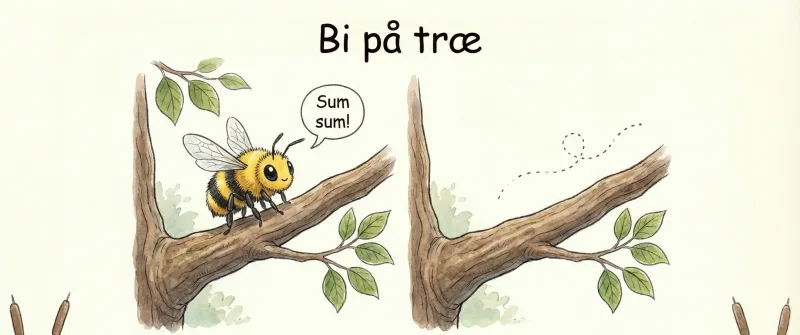
Se bi.Bi er fin.Bi er gul.Bi er på træ.Sum sum!Nu er bi væk.
Talk about the text
- What colour is the bee?Hvilken farve har bien?
- Why do you think the bee flew away?Hvorfor tror du, bien fløj væk?
- Have you seen a bee up close? What did you do?Har du set en bi tæt på? Hvad gjorde du?
For the adult: Sum sum is the bee buzzing, and it is written in the speech bubble in the drawing too. Your child may read that line at speed. Notice that the text says bi and not bien: the words are in their shortest form, so your child can sound their way to every single one of them.
Set 2 Bo on the ice
The words
The text
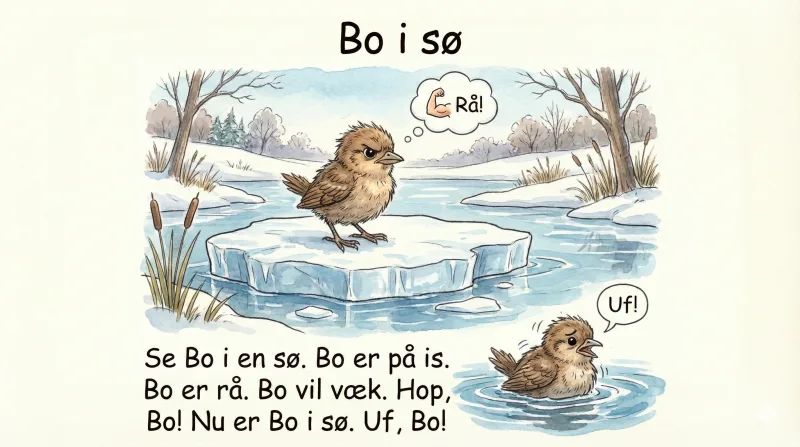
Se Bo i en sø.Bo er på is.Bo er rå.Bo vil væk.Hop, Bo!Nu er Bo i sø.Uf, Bo!
Talk about the text
- What is Bo standing on?Hvad står Bo på?
- Why does Bo say uf at the end?Hvorfor siger Bo uf til sidst?
- What would you do if you fell into cold water?Hvad ville du gøre, hvis du faldt i koldt vand?
For the adult: The drawing shows both before and after: Bo on the ice and Bo down in the water. The text is also drawn into the picture, and it is the same one that stands underneath.
Set 3 Fe and Alf
The words
The text
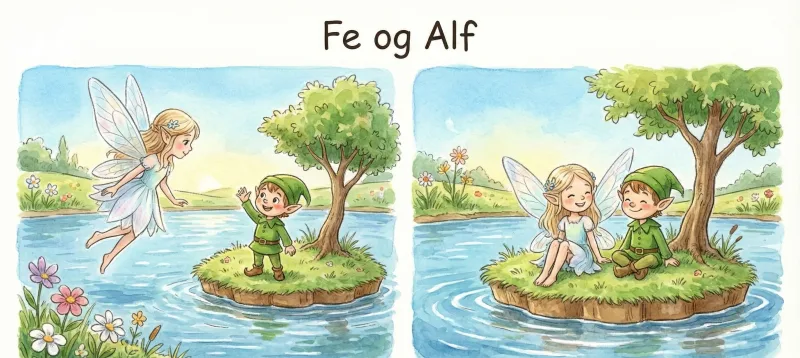
Se Fe.Fe er fin.Se Alf.Alf er på ø.Fe vil på ø.Fe se Alf.Alf se Fe.Nu er de to.Fe og Alf på ø.
Talk about the text
- Where is Alf standing?Hvor står Alf?
- Why do you think Fe wants to get over to Alf?Hvorfor tror du, Fe vil over til Alf?
- What do you do when you want to play with someone you do not know?Hvad gør du, når du gerne vil lege med en, du ikke kender?
For the adult: Fe and Alf are names, and names begin with a capital letter. It is worth pointing out the first time your child comes across it.
Set 4 Ida and Christmas
The words
The text
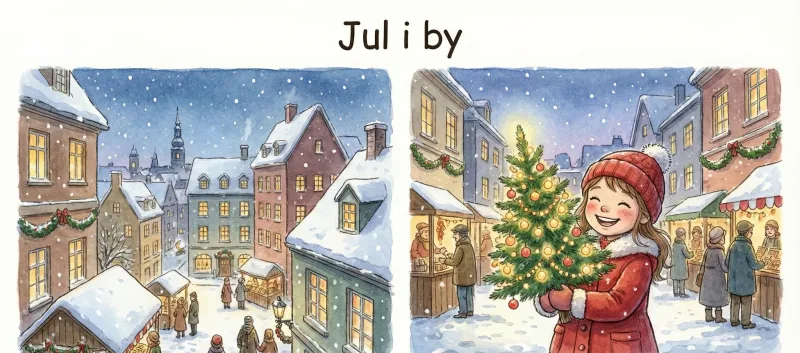
Se sne.Sne på by.Se Ida.Ida har et træ.Et fint træ.Se lys.Lys på træ.Ida er glad.Nu er det jul.
Talk about the text
- What has Ida got with her?Hvad har Ida med sig?
- How can you tell that it is winter?Hvordan kan man se, at det er vinter?
- What do you usually do when Christmas comes?Hvad plejer I at gøre, når det bliver jul?
For the adult: The story has three parts: snow falls, Ida gets a tree, and then it is Christmas. Notice whether your child catches the order.
Set 5 Ice on the lake
The words
The text
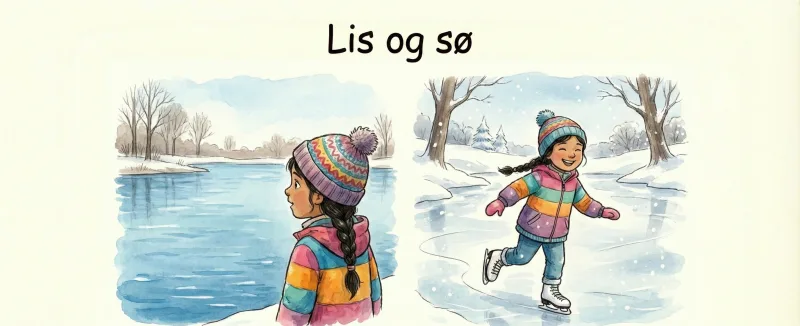
Se sø.Sø er blå.Nu kom is.Is er på sø.Lis vil på is.Pas på, Lis!
Talk about the text
- What has come onto the lake?Hvad er der kommet på søen?
- Why does it say take care at the end?Hvorfor står der pas på til sidst?
- Are you allowed on the ice? What do you say at home?Må man gå ud på isen? Hvad siger I derhjemme?
For the adult: The text ends with Pas på, Lis, which means take care, Lis. It does not say why, and that is on purpose. Let your child work out the answer.
Set 6 The fox and the mouse
The words
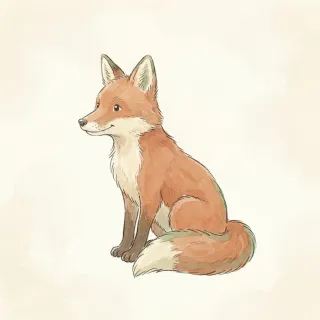 ræv
rævThe text
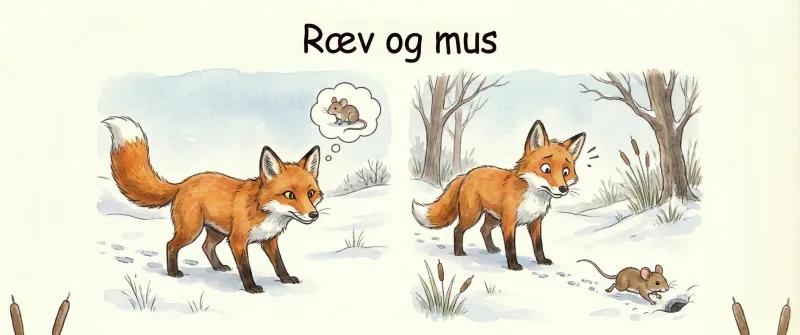
Se ræv.Ræv er rød.Ræv er i sne.Ræv se mus.Ræv vil ha mus.Mus løb.Mus er væk!
Talk about the text
- What colour is the fox?Hvilken farve har ræven?
- Why is the mouse running?Hvorfor løber musen?
- Who do you think you should root for, the fox or the mouse?Hvem synes du, man skal holde med, ræven eller musen?
For the adult: The mouse gets away in the end. Read the last two lines again if your child did not catch it. That is where the story turns.
Set 7 Mik has to sleep
The words
The text
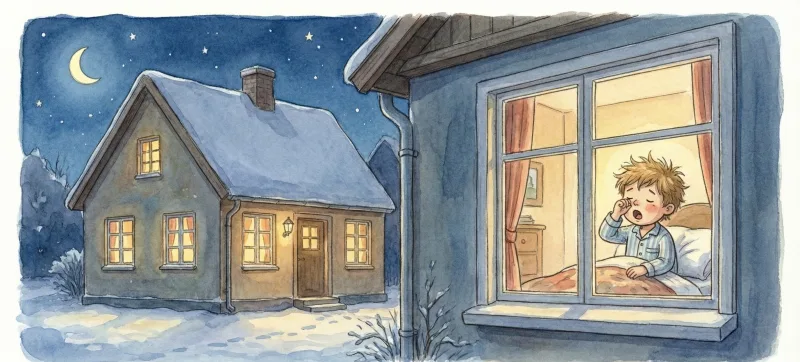
Nu er sol væk.Se lys i hus.Lys er på.Mik er i hus.Mik er så mat.Sov nu, Mik!
Talk about the text
- Where is Mik?Hvor er Mik?
- How can you tell that it is evening?Hvordan kan man se, at det er aften?
- What do you do just before you go to sleep?Hvad gør I, lige før du skal sove?
For the adult: The text takes place in the evening, but it does not say so directly. The clues are that the sun is gone and the light is on.
Is this the right step?
If your child reads most of the words without sounding them out, the step is too easy. If your child gets stuck on more than a few, go one step down. That is not a defeat, it is the fastest way forward.
Borrow books that match: show this text to the librarian, and they can find books at the same level. See library.